Understanding Lipedema: Symptoms, Psychological Impact, Support and Why Awareness Matters
Lipoedema, also commonly spelt "lipedema" in the United States, is a long-term condition that causes an abnormal build-up of fatty tissue, most commonly in the legs, thighs, hips and buttocks. It can also affect the arms. Although lipoedema is often mistaken for general weight gain or obesity, it is a recognised medical condition that can cause pain, swelling, heaviness, bruising and reduced mobility.
For many people, the impact of lipoedema is not only physical. It can affect confidence, body image, relationships, work, mental health and quality of life. Because it is still under-recognised, many people live with symptoms for years before receiving the right diagnosis or support.
What is lipoedema?
Lipoedema is a chronic condition involving a disproportionate build-up of fatty tissue, usually affecting both sides of the body in a symmetrical pattern. It most commonly affects women and often begins or worsens during times of hormonal change, such as puberty, pregnancy or menopause.
Unlike ordinary body fat, lipoedema fat is often resistant to diet and exercise. This means someone may lose weight from other areas of the body but still see little change in the affected legs, hips or arms. This can be distressing and frustrating, especially when people are wrongly blamed for symptoms they cannot control through lifestyle changes alone.
Lipoedema is different from obesity and lymphoedema, although these conditions can sometimes exist alongside one another. This can make diagnosis and management more complex.
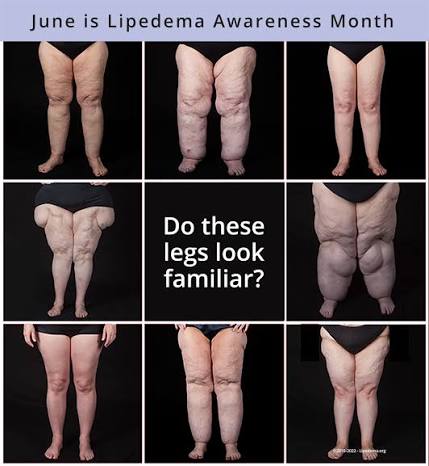
Common signs and symptoms of lipoedema
Symptoms vary from person to person, but common signs include:
- Disproportionately larger legs, thighs, hips or buttocks compared with the upper body
- Fat build-up that usually affects both sides of the body equally
- Feet often being unaffected, creating a "cuff" appearance around the ankles
- Pain, tenderness or aching in the affected areas
- A heavy or tired feeling in the legs
- Easy bruising
- Swelling that may worsen during the day, in warm weather or after standing for long periods
- Skin that may feel soft, uneven, nodular or dimpled
- Reduced mobility as the condition progresses
- Difficulty finding clothes that fit both the upper and lower body comfortably
- Sensitivity to pressure or touch in the affected areas
Facts and figures about lipoedema
Lipoedema is still under-recognised, and because many people remain undiagnosed, exact prevalence figures are difficult to confirm. Some estimates suggest it may affect up to around 1 in 10 women, although reported figures vary between studies and populations.
- Lipoedema mainly affects women, although rare cases have been reported in men.
- It often starts around puberty but may worsen during pregnancy, menopause or other hormonal changes.
- It usually affects both sides of the body symmetrically.
- It commonly affects the legs, thighs, hips and buttocks, and can sometimes affect the arms.
- The feet and hands are often not affected.
- Symptoms can include pain, tenderness, heaviness, swelling, easy bruising and reduced mobility.
- Lipoedema fat is usually resistant to diet and exercise.
- It is often mistaken for obesity or lymphoedema.
- There is no single blood test or scan that confirms lipoedema.
- Diagnosis is usually based on clinical assessment, symptom history and physical examination.
- Many people experience emotional distress because their symptoms are misunderstood, dismissed or blamed on lifestyle.
What health professionals and clinical guidance say about lipoedema
Clinical guidance is clear that lipoedema should not be dismissed as ordinary weight gain.
NICE
Describes lipoedema as "a different condition from obesity and from lymphoedema." NICE also recognises the wider impact of the condition, stating that the size and shape of the legs, together with pain and mobility issues, can have a "profoundly negative effect" on quality of life, physical health and mental health.
RCGP Learning
Describes lipoedema as "an adipose tissue disorder" and notes that it is often diagnosed late, or not diagnosed at all. It may also be confused with obesity or lymphoedema, which can delay appropriate support.
Primary Care Dermatology Society
States that lipoedema can significantly impair mobility, daily activities and psychosocial wellbeing. This reinforces that lipoedema is not simply about appearance — it can affect walking, standing, working, confidence, independence and mental wellbeing.
British Lymphology Society
Highlights the need to manage pain, reduced mobility, swelling and psychosocial issues as part of care.
Why lipoedema is often misdiagnosed
Lipoedema is often mistaken for obesity because it affects body shape and fat distribution. However, there are important differences. Lipoedema usually causes disproportionate fat build-up in specific areas, often with pain, tenderness and easy bruising. The feet are often spared, which can help distinguish it from some other causes of swelling.
Misdiagnosis can delay treatment and support. People may be repeatedly advised to lose weight without anyone recognising that the affected tissue may not respond in the same way as ordinary fat. This can lead to guilt, frustration, shame and worsening psychological distress.
Some people are also misdiagnosed with lymphoedema. Although lipoedema and lymphoedema are different conditions, they can sometimes occur together, particularly in later stages.
The psychological and emotional impact of lipoedema
The emotional impact of lipoedema can be significant. Many people live with symptoms for years before receiving a diagnosis. During that time, they may be told to lose weight, exercise more or simply accept their body shape, even when their symptoms include pain, bruising, heaviness and mobility problems.
This can lead to:
- Low self-esteem and poor body image
- Anxiety and depression
- Social withdrawal and embarrassment about clothing or appearance
- Avoidance of swimming, exercise classes or social events
- Frustration when weight-loss efforts do not change the affected areas
- Feeling dismissed by healthcare professionals
- Loss of confidence in seeking medical help
- Fear that symptoms will get worse over time
It is also common for people with lipoedema to feel blamed for their condition. Lipoedema is not laziness, overeating or a lack of willpower. It is a chronic condition that deserves proper recognition and compassionate care.
A diagnosis can be validating. For many people, finally having a name for their symptoms helps reduce shame and self-blame. It can also help them access support, learn self-management strategies and explain the condition to family, employers and healthcare professionals.
How is lipoedema diagnosed?
There is no single blood test or scan that confirms lipoedema. Diagnosis is usually based on symptoms, medical history and physical examination.
A healthcare professional may ask about:
- When symptoms started and whether they worsened during puberty, pregnancy or menopause
- Pain, tenderness or bruising
- Family history
- Changes in mobility and swelling patterns
- Whether the feet are affected
- Previous attempts at weight loss and how the body responded
- Whether symptoms affect daily living or mental wellbeing
If you think you may have lipoedema, it can help to keep a symptom diary and take photographs over time to show changes in shape, swelling or bruising.
Management and treatment options
There is currently no simple cure for lipoedema, but symptoms can often be managed. Treatment usually focuses on reducing pain, supporting mobility, improving quality of life and helping people feel more in control.
Compression garments
Can help with swelling, heaviness, pain and comfort. Should ideally be properly measured and fitted by someone experienced in compression therapy.
Physical activity
Low-impact activity may help with mobility, circulation, strength and mental wellbeing. Swimming, walking, cycling, stretching and water-based exercise may be more comfortable for some people.
Healthy eating
A balanced diet can support general health, energy levels and inflammation management. However, people should not be made to feel that diet alone will "fix" lipoedema.
Manual lymphatic drainage
Some people find specialist massage techniques helpful for swelling, discomfort and heaviness. This should ideally be provided by a trained professional.
Pain management
Pain should be taken seriously. People may need support from their GP, physiotherapist, pain service or specialist clinician to manage chronic pain safely.
Psychological support
Counselling, peer support groups or mental health support can be important, particularly if lipoedema is affecting confidence, mood, relationships, work or quality of life.
Surgery
In some cases, specialist liposuction may be considered. This is a specialist procedure aimed at removing abnormal fatty tissue and improving symptoms — not cosmetic liposuction for appearance alone. Availability, suitability and funding can vary. Anyone considering surgery should speak to an appropriately qualified specialist.
When to seek medical advice
You should consider speaking to your GP or another healthcare professional if you notice:
- Painful or heavy legs
- Disproportionate fat build-up in the legs, hips or arms
- Easy bruising
- Swelling that worsens during the day
- Difficulty walking or reduced mobility
- Body shape changes that do not respond as expected to diet and exercise
- Symptoms affecting your mental health, confidence or quality of life
Seek urgent medical advice if you develop sudden swelling in one leg, redness, warmth, severe pain, chest pain or shortness of breath, as these could be signs of a more urgent medical problem.
Lipoedema support groups and organisations
Useful Support Organisations
Use 999 for medical emergencies. For urgent advice that is not an emergency, call NHS 111.
Lipoedema UK
UK charity providing information for patients and healthcare professionals. Raises awareness and supports earlier diagnosis.
lipoedema.co.ukTalk Lipoedema
UK charity providing information, peer support, online groups, local roadshows and national conferences for people with lipoedema.
talklipoedema.orgLymphoedema Support Network
UK national patient support organisation for people living with or affected by lymphoedema. Helpful for swelling, compression and self-management information.
lymphoedema.orgLipedema Foundation
Research-focused organisation providing patient resources, educational information and self-advocacy guidance.
lipedema.orgLipedema Project
Education, resources and community support for people living with lipedema/lipoedema. Wider international resources and patient education.
lipedemaproject.orgOnline communities can be helpful, but should be used alongside professional medical advice. Always speak to a healthcare professional before starting new treatments or major lifestyle changes.
References & Sources
- NHS. Lipoedema. nhs.uk/conditions/lipoedema
- NICE. Liposuction for chronic lipoedema. HealthTech guidance HTG618. nice.org.uk/guidance/htg618
- RCGP Learning. Lipoedema: an adipose tissue disorder. rcgp.org.uk
- Primary Care Dermatology Society. Lipoedema clinical guidance. pcds.org.uk
- Wounds UK. Best Practice Guidelines: The Management of Lipoedema. wounds-uk.com
- Lipoedema UK. Patient and healthcare professional information. lipoedema.co.uk
- Talk Lipoedema. Support for people with lipoedema, families and carers. talklipoedema.org
- Lymphoedema Support Network. Lipoedema information and support. lymphoedema.org
- Lipedema Foundation. Patient resources. lipedema.org
- Lipedema Project. Education and community resources. lipedemaproject.org
This article was published in June 2026. Readers are encouraged to verify all information and contact details directly with each organisation and their healthcare professional.
Lipoedema is real, chronic and often painful.
It is not simply weight gain, and it is not a lack of willpower.
Early recognition, supportive care and better awareness can make a meaningful difference to people living with lipoedema.
You are not alone.